Oak Island Season 13 — What the team uncovered deep underground may be one of the most astonishing discoveries yet. ⛏️🔥 Beneath the final chamber, they found part of a mysterious Roman-style vault dating back to the 2nd century AD—complete with traces of frescoes, ornate stucco, and a mosaic floor that hints at wealth, power, and history far beyond anyone expected. Now the big question is no longer just what was buried here… but whether Rick is about to bring this hidden piece of history into the light for the world to see… 😱✨
When the final underground chambers were opened, Oak Island did not give up another random relic. It gave up a place that feels like it belonged to someone important — a vault built in the lavish Roman style, carrying the quiet traces of wealth, taste, and power from the 2nd century AD. And now the biggest question is no longer just what was hidden inside. It is whether the island is ready to let the world see it.
The moment the chamber stopped feeling like a theory
For years, Oak Island has lived in the tension between hope and disbelief. Every season brings another dig, another anomaly, another moment where the team gets close enough to believe the island may finally give something real back. But this discovery feels different from the start.
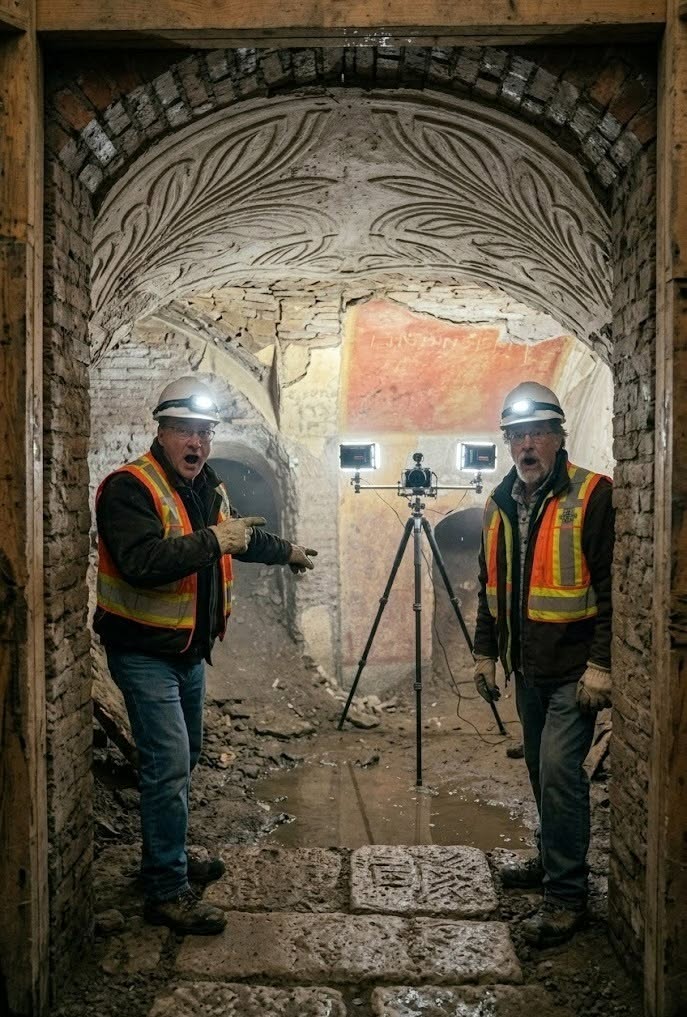
The final underground chambers did not open onto a simple void or a forgotten storage space. They revealed part of a mysterious vault shaped by Roman influence, the kind of place that immediately changes the emotional tone of the search. A vault like this does not feel accidental. It feels deliberate, formal, and built with pride. The moment the walls came into view, the island’s story stopped feeling like a treasure hunt and started feeling like a confrontation with another civilization’s private world.
That is what makes this find so powerful.




The traces left behind are not just old. They are elegant. Decorative frescoes. Ornate stucco work. A high-end mosaic floor. Those details matter because they speak the language of status. They do not belong to a hurried hiding place or an improvised cache. They belong to a space where wealth was displayed, identity was protected, and living standards were high enough to leave beauty in the stone.
It is the kind of discovery that makes everyone stop and stare, because suddenly the island does not just hold mystery. It holds refinement. It holds evidence that this was once more than a place where something was buried. It was a place where something mattered enough to be sealed away with care.
And once the chamber feels intentional, the entire search changes.
A Roman vault raises a much bigger human question
What makes the vault so compelling is not only its age, but what it suggests about the people who used it.
The team believes it may have belonged to a wealthy family from the 2nd century AD. That idea transforms the discovery from an archaeological oddity into a human story. Suddenly, the vault is no longer just a chamber beneath Oak Island. It is a trace of a household, a status, a way of life, and maybe even a final attempt to preserve something valuable when the world around it changed.
That is the part that gives the discovery emotional weight.
A family does not build a place like this casually. A wealthy family invests in space like this because they expect continuity. They expect memory. They expect their surroundings to reflect who they are. To uncover a vault like this on Oak Island is to realize that the island may be preserving a story of people who once lived with comfort, artistry, and the confidence that their legacy could survive time.
But Oak Island has a way of turning legacy into mystery.
The more the team sees, the more questions rise. How did a Roman-style vault end up here? Was it transported, recreated, protected, or preserved as part of a larger hidden network? Was this the home of a family? A ceremonial space? A storage chamber? Or something even more complex that modern eyes have only begun to understand?
Those questions matter because they shift the story away from simple treasure. This is no longer only about gold or buried valuables. It is about the human desire to leave something behind, to protect wealth, beauty, and identity from being erased.
That makes the vault feel personal in a way most discoveries do not.
It feels like someone was here before the search team ever arrived — and wanted the world to forget.
Rick’s vision turns discovery into legacy
What makes this moment especially meaningful is Rick’s response to it.
Rather than treating the vault as just another secret to be exploited, Rick seems ready to do something bigger with it: bring it into the light. That choice changes everything. It turns the discovery from a private triumph into something public, something historical, something that could finally give Oak Island a new identity beyond the endless chase for treasure.
That is a beautiful shift.
When the final underground chambers were opened, Oak Island did not give up another random relic. It gave up a place that feels like it belonged to someone important — a vault built in the lavish Roman style, carrying the quiet traces of wealth, taste, and power from the 2nd century AD. And now the biggest question is no longer just what was hidden inside. It is whether the island is ready to let the world see it.
The moment the chamber stopped feeling like a theory
For years, Oak Island has lived in the tension between hope and disbelief. Every season brings another dig, another anomaly, another moment where the team gets close enough to believe the island may finally give something real back. But this discovery feels different from the start.
The final underground chambers did not open onto a simple void or a forgotten storage space. They revealed part of a mysterious vault shaped by Roman influence, the kind of place that immediately changes the emotional tone of the search. A vault like this does not feel accidental. It feels deliberate, formal, and built with pride. The moment the walls came into view, the island’s story stopped feeling like a treasure hunt and started feeling like a confrontation with another civilization’s private world.
That is what makes this find so powerful.
The traces left behind are not just old. They are elegant. Decorative frescoes. Ornate stucco work. A high-end mosaic floor. Those details matter because they speak the language of status. They do not belong to a hurried hiding place or an improvised cache. They belong to a space where wealth was displayed, identity was protected, and living standards were high enough to leave beauty in the stone.
It is the kind of discovery that makes everyone stop and stare, because suddenly the island does not just hold mystery. It holds refinement. It holds evidence that this was once more than a place where something was buried. It was a place where something mattered enough to be sealed away with care.
And once the chamber feels intentional, the entire search changes.
A Roman vault raises a much bigger human question
What makes the vault so compelling is not only its age, but what it suggests about the people who used it.
The team believes it may have belonged to a wealthy family from the 2nd century AD. That idea transforms the discovery from an archaeological oddity into a human story. Suddenly, the vault is no longer just a chamber beneath Oak Island. It is a trace of a household, a status, a way of life, and maybe even a final attempt to preserve something valuable when the world around it changed.
That is the part that gives the discovery emotional weight.
A family does not build a place like this casually. A wealthy family invests in space like this because they expect continuity. They expect memory. They expect their surroundings to reflect who they are. To uncover a vault like this on Oak Island is to realize that the island may be preserving a story of people who once lived with comfort, artistry, and the confidence that their legacy could survive time.
But Oak Island has a way of turning legacy into mystery.
The more the team sees, the more questions rise. How did a Roman-style vault end up here? Was it transported, recreated, protected, or preserved as part of a larger hidden network? Was this the home of a family? A ceremonial space? A storage chamber? Or something even more complex that modern eyes have only begun to understand?
Those questions matter because they shift the story away from simple treasure. This is no longer only about gold or buried valuables. It is about the human desire to leave something behind, to protect wealth, beauty, and identity from being erased.
That makes the vault feel personal in a way most discoveries do not.
It feels like someone was here before the search team ever arrived — and wanted the world to forget.
Rick’s vision turns discovery into legacy
What makes this moment especially meaningful is Rick’s response to it.
Rather than treating the vault as just another secret to be exploited, Rick seems ready to do something bigger with it: bring it into the light. That choice changes everything. It turns the discovery from a private triumph into something public, something historical, something that could finally give Oak Island a new identity beyond the endless chase for treasure.
That is a beautiful shift.
For years, people have looked at Oak Island as a place of obsession. A place where the hunt sometimes matters more than the answer. But a Roman-style vault with frescoes, stucco, and a mosaic floor is more than a clue. It is a cultural object. It is a piece of history that deserves to be seen, studied, and understood. If the site is opened to the public, it could become a place where visitors do not just hear the story of Oak Island — they walk through it.
That possibility gives the discovery a rare emotional lift.
Because some finds are too important to stay buried. Some stories are too human to keep hidden. And if Rick is truly ready to bring this vault to light, then Oak Island may be stepping into its most transformative chapter yet. Not a chapter of secrecy, but one of sharing. Not a chapter of speculation, but one of preservation.
And that may be the most powerful thing the island has ever offered.
Not just proof that something extraordinary was hidden there.
But proof that it can still matter to the world now.
That is why this vault feels so different. It does not simply deepen the mystery. It opens the door to a new kind of legacy — one that belongs not just to the team, but to everyone who has followed Oak Island and waited for the day the island would finally reveal something worthy of history itself.
For years, people have looked at Oak Island as a place of obsession. A place where the hunt sometimes matters more than the answer. But a Roman-style vault with frescoes, stucco, and a mosaic floor is more than a clue. It is a cultural object. It is a piece of history that deserves to be seen, studied, and understood. If the site is opened to the public, it could become a place where visitors do not just hear the story of Oak Island — they walk through it.
That possibility gives the discovery a rare emotional lift.
Because some finds are too important to stay buried. Some stories are too human to keep hidden. And if Rick is truly ready to bring this vault to light, then Oak Island may be stepping into its most transformative chapter yet. Not a chapter of secrecy, but one of sharing. Not a chapter of speculation, but one of preservation.
And that may be the most powerful thing the island has ever offered.
Not just proof that something extraordinary was hidden there.
But proof that it can still matter to the world now.
That is why this vault feels so different. It does not simply deepen the mystery. It opens the door to a new kind of legacy — one that belongs not just to the team, but to everyone who has followed Oak Island and waited for the day the island would finally reveal something worthy of history itself.